


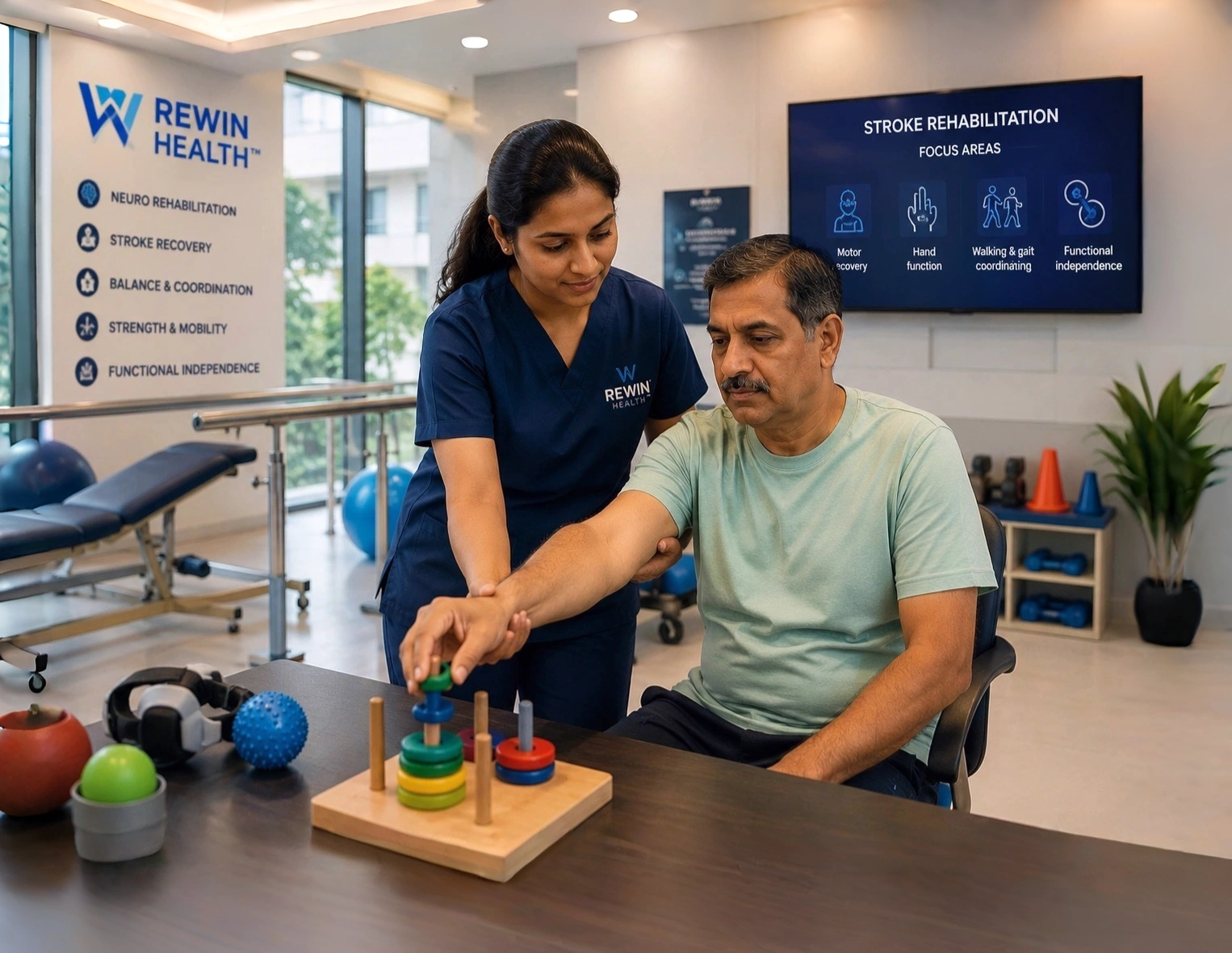
Three years of conventional therapy. No hand movement.
Then Rewin.
Mr. Gnanaprakash had zero hand movement for three years after his brain tumour surgery. After 3 months of VR-assisted hand therapy at Rewin Health, he could open and close his fingers and hold objects again.
If you have been told your hand will not recover further, come and let us evaluate that before it becomes your final answer.
We combine advanced physiotherapy with AI-powered motion sensors and VR-based rehabilitation to achieve outcomes conventional therapy alone cannot match

Padma Shri Bombay Jayashri recovered hand precision for Carnatic performance after a brain aneurysm at Rewin Health
Carnatic performance demands among the highest-precision hand and finger movements a human being performs. After a life-threatening brain aneurysm, Padma Shri and Sangeetha Kalanidhi awardee Bombay Jayashri chose Rewin Health for her rehabilitation. Through our structured VR-assisted programme, she recovered not just walking but the fine motor precision her music demands. Times of India covered her journey.
If structured VR hand rehabilitation could achieve this it can help your family member too
50%+ better outcomes than conventional physiotherapy, here is why
This is not a marketing claim. It is what our clinical data shows, consistently, across our patient population. The reason is mechanical not a matter of therapist skill, but of what the technology enables.
What we measure
Conventional Physiotherapy
Rewin VR + Sensor Therapy
Movement repetitions per session
30–50
200–400
Real-time feedback to brain
Minimal
Immediate & precise
Individual finger tracking
Not possible
Sensor-tracked per digit
Detects movement before it is visible
No
Yes – camera detection
Programme adapts to patient progress
Manual, slow
Automatic, session-by-session
Patient motivation and engagement
Declines over time
Sustained – gamified tasks
Outcome improvement vs conventional
Baseline
50%+ better outcomes
The gap is not about effort or skill. A dedicated physiotherapist doing their best with conventional tools will always be limited by what those tools can deliver. Rewin’s technology removes the ceiling.
What stroke does to the body and how rehabilitation addresses it
THE RIGHT PATIENT FOR THIS PROGRAMME
CONDITIONS WE TREAT
- Stroke survivor hand has not recovered or has plateaued
- 3 months to 3+ years post-stroke with persistent hand weakness
- Told further improvement is unlikely' by previous clinic
- Tried conventional physio without meaningful hand progress
- Post-brain surgery hand movement affected
- Parkinson's - hand tremors affecting daily function
- TBI - hand weakness or loss of fine motor control
- Post-wrist/hand surgery - stiffness and weakness
- Children with hand coordination or developmental difficulties
THE RIGHT PATIENT FOR THIS PROGRAMME
Neurological
- Stroke and hemiplegia
- Brain tumour post-surgery
- Parkinson's disease
- Traumatic brain injury (TBI)
- Essential and action tremor
Orthopaedic
- Post-fracture hand rehabilitation
- Post-wrist/tendon surgery
- Crush injury and nerve damage
Paediatric
- Developmental coordination disorder
- Cerebral palsy - upper limb
- Writing and fine motor difficulties
CONDITIONS WE TREAT
What our patients have achieved – in their own words
Three years of conventional therapy. Not a single finger moved
Mr. Gnanaprakash, 62, lost all movement in his left hand following brain tumour surgery. For three years, he underwent conventional physiotherapy at multiple clinics. Nothing changed. His family had accepted that hand function was permanently lost.
At Rewin Health, he began our VR and sensor-based hand rehabilitation programme. Within 3 months while continuing physiotherapy alongside, he could open and close his fingers voluntarily and hold cylindrical objects for the first time in three years.
The immersive VR training gave me motivation, confidence, and functional recovery I never thought possible
Post-brain tumour surgery, 3 years chronic
“After my wrist fracture surgery, my hand became stiff and weak. I could not hold small objects or use my fingers properly. The VR-based hand therapy at Rewin was interactive and motivating completely different from the exercises I had been doing. Slowly I could move my fingers better, improve my grip, and use my hand comfortably again in daily activities. I was back to cooking within two months.”
Post-wrist fracture surgery
“My child had difficulty holding a pencil and his hands shook while writing. Two schools had flagged the problem but we did not know where to go. The VR sessions at Rewin were interactive and enjoyable he genuinely looked forward to them. Over time we noticed better hand control, reduced shaking, and real confidence in writing and daily activities. His teacher commented on the change.”
Paediatric hand coordination
From first session to functional independence – a realistic timeline
Every patient is different. What follows is a typical outcome trajectory for a chronic stroke patient with moderate hand dysfunction who attends 3–4 sessions per week and completes their home exercise programme. We share this not as a guarantee, but as an honest picture of what a committed programme achieves.
Early Signs
- Finger flicker - first voluntary movement
- Reduced spasticity, hand less curled
- Grip detectable on sensor
- Increased awareness of affected hand
Functional Gains
- Open and close fingers on command
- Hold cylindrical objects (glass, bottle)
- Thumb-to-finger pinch movement
- Improved arm-hand coordination
Daily Tasks
- Turn pages, press buttons, use phone
- Write or type with affected hand
- Dress, eat, groom with less assistance
- Reduced caregiver dependency
Sustained Recovery
- Cooking, driving for motivated patients
- Fine motor - writing, musical instruments
- Independent home exercise routine
- Confidence and quality-of-life gains
Outcomes first. The science behind them for those who want to know.
Scroll past this section if you just want to book an assessment. But if you want to understand why VR and sensor-based hand therapy achieves what conventional physio cannot — this is the explanation.
Neuroplasticity: the brain rewires with the right stimulus
When stroke or brain injury disrupts the pathway between the brain and the hand, the hand does not lose function because the muscles are damaged. It loses function because the neural pathway has been disrupted. The brain cannot send the signal. Neuroplasticity is the brain’s mechanism for rebuilding — forming new connections through undamaged areas that take over the function.
The critical condition for neuroplasticity is stimulus: specifically, high-repetition, task-specific, feedback-rich movement. The brain needs to attempt and receive feedback on movements many times in succession to form and strengthen new pathways. This is not theory — it is one of the most replicated findings in rehabilitation neuroscience.
Why conventional physiotherapy reaches a ceiling
A skilled physiotherapist guiding hand exercises achieves 30–50 quality repetitions per session. This is genuinely valuable but it is far below the threshold for sustained neuroplastic change. Over time, the stimulus is insufficient to drive further recovery. The patient plateaus. This is not a therapist failure. It is the physical limit of what manual guidance can deliver. The brain needs more, and conventional tools cannot provide it.
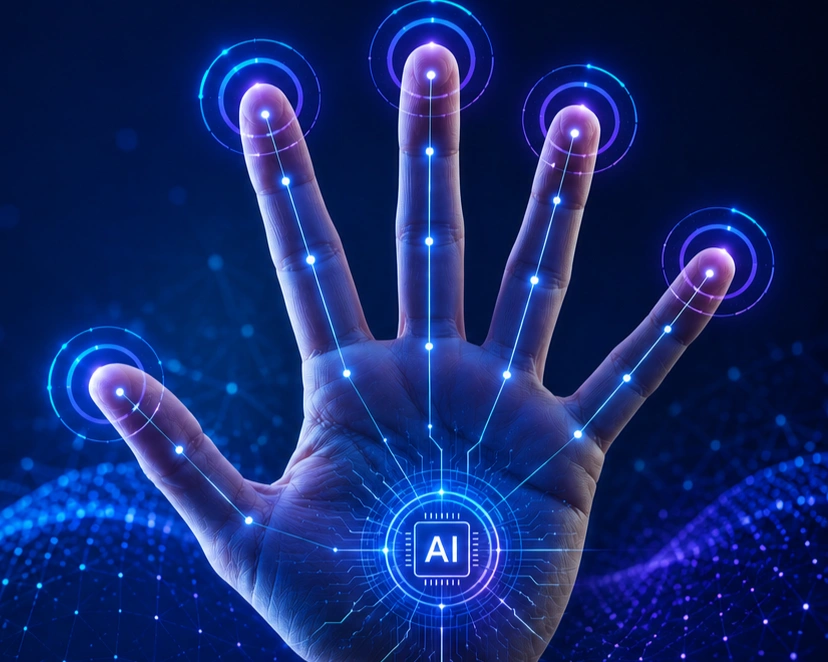
1. AI Motion Sensors – individual finger tracking
Wearable sensors attached to the hand and fingers track the position, velocity, and range of motion of each digit in real time. The visual exercise environment responds directly to the patient’s actual movement. The brain receives precise, immediate feedback about what it is doing. This specificity is the neuroplasticity stimulus that manual therapy cannot replicate.
2. Camera-Based AI Detection – for minimal residual movement
For patients with very limited hand movement those who cannot yet move their fingers visibly camera-based AI detects even subtle sub-threshold movement and translates it into the exercise environment. Rehabilitation begins where the patient actually is, not where we wish they were. The brain receives the stimulus to start building a pathway even before visible movement exists.
3. Gamified VR Exercises — volume and sustained engagement
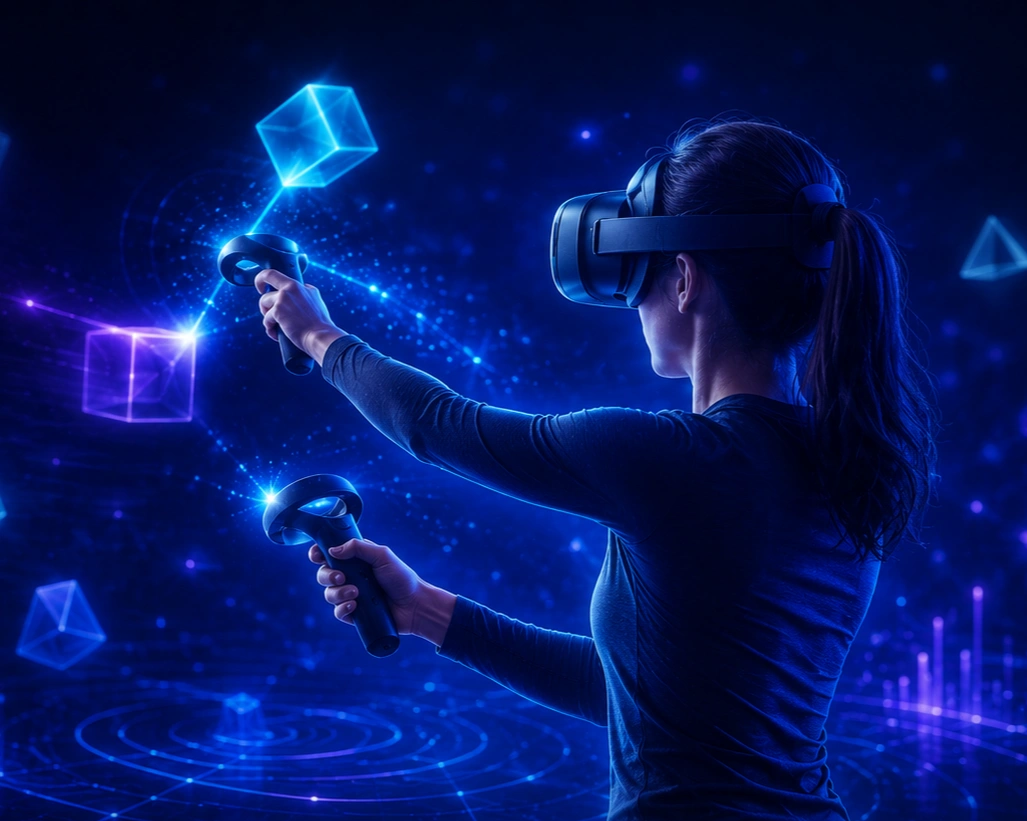
The VR environment presents engaging tasks — reaching for objects, sorting, grasping and releasing, task-based movements — each requiring specific hand movements tracked and scored in real time. Because the environment is engaging and the feedback is immediate, patients consistently complete 200–400 movement repetitions per session. This is the volume the brain needs. This is four to eight times what conventional therapy delivers.
4. Progressive Challenge — the brain must be pushed, not just exercised
The programme adapts automatically as the patient improves. As grip strength increases, tasks require more precision. As range of motion improves, reach demands increase. Neuroplastic change requires being challenged at the edge of current capability — not within the comfort of existing function. Rewin’s system tracks improvement session by session and adjusts difficulty accordingly.
What your hand rehabilitation programme looks like at Rewin
1. Free Assessment
45–60 min. Full hand evaluation: sensation, ROM, grip strength, spasticity, functional tasks. No obligation.
2. Honest Prognosis
Your therapist gives a specific, realistic picture of what this programme can achieve for your condition
3. Programme Design
Session-by-session plan: technology mix, repetition targets, milestones, home exercise prescription.
4. VR + Physio Sessions
3–4 sessions/week. 45–60 min each. 200–400 hand repetitions per session. Conventional physio combined
5. Progress Reviews
Scores reviewed every 2 weeks. You see the trajectory. Programme adjusted based on what the data shows
6. Functional Recovery
Programme ends when you achieve the functional targets not at an arbitrary session count.
45–60 minutes
Session length
3–5 sessions per week
Recommended frequency
8–16 weeks primary programme
Typical programme length
What makes Rewin different from every other hand rehabilitation clinic
Better outcomes than conventional therapy
Patients treated across all conditions
Mr. Gnanaprakash recovered after 3 yrs of failed conventional therapy
Hospital partners: Apollo, MIOT, NIMHANS
Questions families and patients ask us most
Yes. The scientific evidence is clear and consistent: neuroplasticity the brain’s ability to form new neural connections does not stop after one year, or two years, or three years. What stops is the stimulus. Conventional physio, delivered at the same intensity over years, no longer challenges the brain sufficiently to generate new connections. Rewin’s technology changes the stimulus fundamentally. Mr. Gnanaprakash had zero hand movement for three years. After 3 months of our programme, he had regained voluntary finger movement and functional grasp. This is what changes with the right level of stimulus.
Yes — this is specifically where our camera-based AI detection is most valuable. For patients with no visible hand movement, conventional therapy has very little to work with. Rewin’s camera-based detection can identify sub-threshold neural activity and translate even minimal signals into the exercise environment, beginning to build the neuroplastic pathway before visible movement exists. We have successfully initiated recovery programmes with patients who had no voluntary hand movement at all.
Most neurologists give an honest assessment based on what conventional physiotherapy delivers. They are right about conventional therapy — it has a ceiling. What most are not yet factoring in is what high-intensity, AI sensor-guided, VR-assisted therapy achieves. This is recent technology, and the clinical outcomes are significantly different from what most physicians have in their frame of reference. We are not contradicting your neurologist’s clinical assessment. We are offering a different level of stimulus and asking you to evaluate the results. A free assessment costs you 45 minutes and nothing else.
VR hand rehabilitation is safe and not painful. Sessions are supervised throughout by a certified Rewin physiotherapist. The exercises are delivered through a screen or VR environment and involve the patient moving their hand in response to visual tasks. Intensity is carefully calibrated especially in early sessions to match the patient’s tolerance. Patients describe sessions as engaging, not arduous. If at any point there is discomfort or fatigue, the therapist adjusts immediately.
Stroke is our primary specialisation. it represents the majority of our neurological patient population and is the condition our VR platform is most deeply optimised for. We also treat Parkinson’s disease, traumatic brain injury, post-brain surgery rehabilitation, and vestibular disorders. Our approach is the same: structured assessment, planned programme, measured outcomes.
Yes – from our Chennai clinic. A certified Rewin physiotherapist visits your home with the structured programme, and — for hand function patients — portable VR equipment where appropriate. Home visits are particularly valuable for stroke patients in early recovery who cannot safely travel, and for senior patients. WhatsApp us to confirm availability and pricing in your area. In Thanjavur and Puducherry, we recommend in-clinic attendance but can discuss options case by case.
For patients with some residual hand movement, most begin to see measurable improvement on the motion sensors within 2–4 weeks (for mild to moderate) and more than 5 weeks for Severe conditions with consistent therapy. Visible functional improvement typically follows at weeks 4–8. For patients with no initial movement, the first detectable signal on the sensors usually appears between weeks 3–6. The sensor data often shows neurological progress before it is visible to the naked eye this is important information we share with patients and families at every review. We do not manage progress by observation alone.
We recommend 3–4 sessions per week for the primary programme. This frequency maintains the neuroplasticity stimulus between sessions — the brain needs regular, repeated input to consolidate new connections. Fewer than 3 sessions per week significantly reduces the pace of improvement. We also prescribe a 15–20 minute daily home exercise programme between sessions, which patients on structured home programmes complete alongside clinic attendance.
Yes — from our Chennai clinic. A certified Rewin physiotherapist can visit your home with portable VR hand therapy equipment. This is ideal for stroke patients who cannot travel, post-surgical patients in early recovery, and senior patients. Home visit sessions are priced at ₹1,200–1,500. WhatsApp us to confirm availability in your area.
Advanced hand rehabilitation across
South India
The same programme. The same technology. The same outcomes. Available at all three Rewin clinics — Chennai, Thanjavur, and Puducherry.
Chennai
- In-clinic physiotherapy
- Home visit service
- VR hand therapy
Mon–Sat | 9 AM – 7 PM
Thanjavur
- Structured stroke rehab
- VR hand therapy
- Orthopaedic & senior care
Mon–Sat 9 | AM – 6 PM
Puducherry
- Personalised physiotherapy
- Stroke & hand rehab
- Post-surgical recovery
Mon–Sat 9 | AM – 6 PM
Before you accept that the hand will not recover.
We understand why you might have reached this point. Multiple clinicians. Months or years of therapy. A family member who has learned to live with a hand that does not work. It is reasonable to accept a verdict that has been given to you by people you trust.
We also know — from Mr. Gnanaprakash, from Mrs. Lakshmi Raman, from dozens of patients across our clinics — that the verdict is sometimes premature. That the ceiling was the ceiling of the tools being used, not the ceiling of what was possible.
All we ask is 45 minutes for a free assessment. Your therapist will evaluate the hand with our sensors and their clinical expertise, and give you an honest answer about what our programme can realistically achieve for this patient — with no pressure to continue if the answer is not what you hoped for.