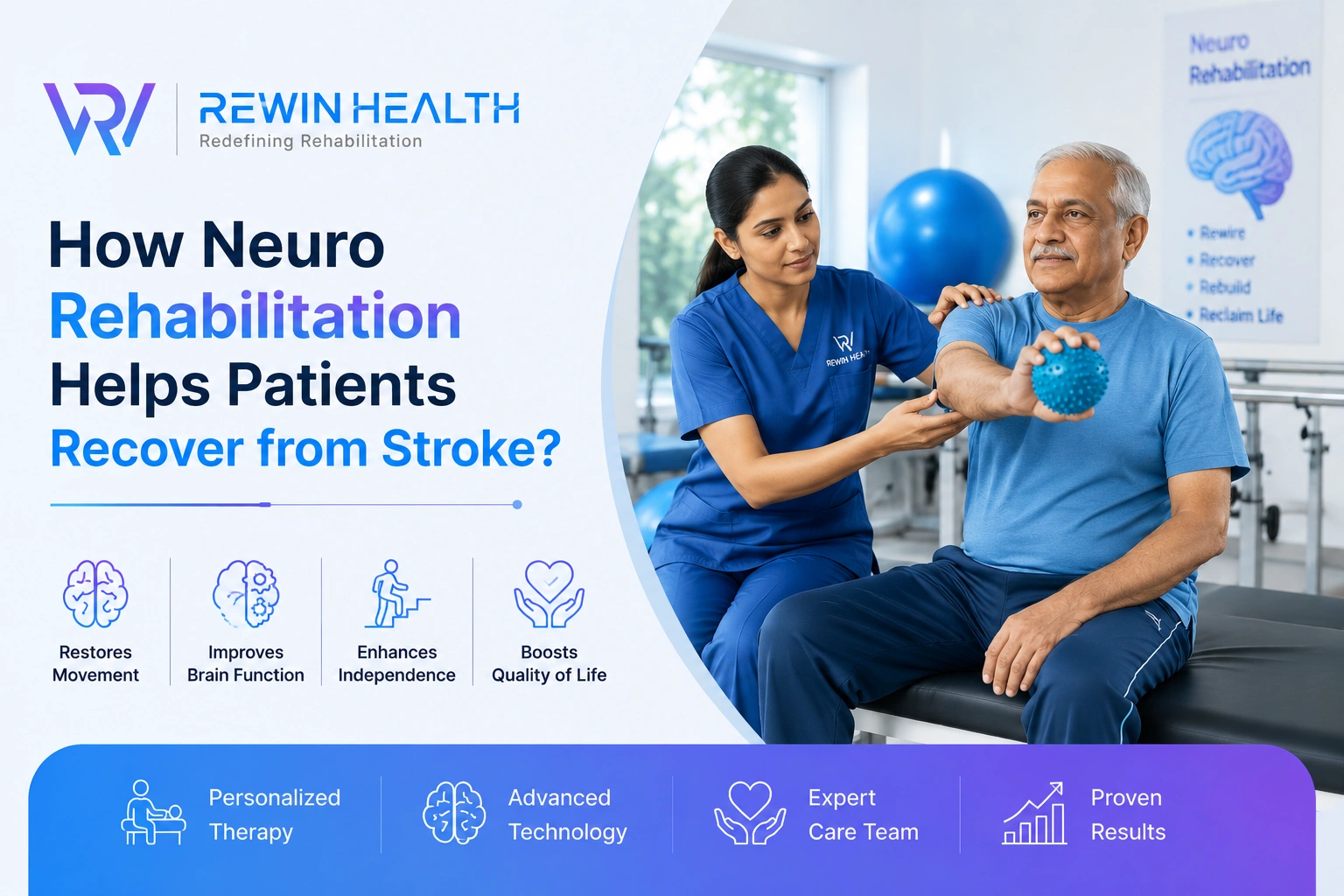
How Neuro Rehabilitation Helps Patients Recover from Stroke?
What is Stroke Rehabilitation?
A stroke can happen suddenly and change a person’s life within minutes. It can affect movement, speech, balance, memory, coordination, and the ability to perform everyday activities independently. While emergency medical care is critical during a stroke, recovery does not end after hospitalization. This is where neuro rehabilitation plays a major role.
Neuro rehabilitation is a structured therapy process designed to help stroke survivors regain function, improve mobility, rebuild confidence, and return to daily life as independently as possible.
At ReWin Health, technology-enabled neuro rehabilitation combines physiotherapy, functional training, AI-powered therapy, and virtual reality rehabilitation to support long-term recovery outcomes.
What Happens to the Brain After a Stroke?
A stroke occurs when blood supply to part of the brain is interrupted, causing brain cells to become damaged. Depending on the affected area of the brain, patients may experience:
Weakness in the arm or leg
Difficulty walking
Loss of balance
Hand function impairment
Speech difficulties
Facial drooping
Reduced coordination
Memory and cognitive challenges
The impact can vary from mild to severe, but early rehabilitation can significantly improve recovery potential.
What is Neuro Rehabilitation?
Neuro rehabilitation is a specialized rehabilitation program designed for people with neurological conditions such as:
Stroke
Brain injury
Parkinson’s disease
Spinal cord injury
Neurological movement disorders
The goal is to retrain the brain and body through repetitive, guided, and functional exercises that improve movement, coordination, and independence.
Why Early Neuro Rehabilitation Matters
One of the most important factors in stroke recovery is early intervention.
The brain has an incredible ability called neuroplasticity, which means it can reorganize and form new neural connections after injury.
Early Stroke rehabilitation helps:
Stimulate the brain
Improve movement recovery
Reduce stiffness and weakness
Prevent secondary complications
Improve balance and walking ability
Support faster functional recovery
The sooner therapy begins, the better the chances of improving daily function and independence.
How Neuro Rehabilitation Helps Stroke Patients
1. Improves Mobility and Walking Ability
Many stroke survivors experience weakness on one side of the body, making walking difficult.
Neuro rehabilitation includes:
Gait training
Balance exercises
Functional mobility activities
Muscle strengthening
Walking practice
These therapies help patients regain stability, confidence, and safer movement.
2. Supports Hand Function Recovery
Hand recovery is often one of the biggest challenges after stroke.
Patients may struggle with:
Gripping objects
Writing
Buttoning clothes
Holding utensils
Rehabilitation focuses on repetitive hand exercises, coordination activities, task-based training, and functional movement practice to improve upper limb recovery.
3. Enhances Balance and Coordination
Stroke can affect posture and balance, increasing fall risk.
Balance training activities help:
Improve body control
Reduce dizziness and instability
Increase confidence while standing and walking
Support safer movement in daily life
Functional rehabilitation programs also help patients relearn coordinated movements.
4. Helps Restore Functional Independence
The ultimate goal of neuro rehabilitation is to help individuals perform daily activities independently.
Therapy may focus on:
Sitting and standing
Climbing stairs
Personal care activities
Reaching and grasping
Daily routine training
Functional recovery improves quality of life and reduces dependence on caregivers.
The Role of AI Technology in Modern Neuro Rehabilitation
AI Technology is transforming stroke rehabilitation.
At ReWin Health, advanced rehabilitation solutions combine:
AI-powered rehabilitation
VR-based therapy
Motion sensor technology
Interactive rehabilitation exercises
Functional movement training
These technology-enabled therapies help improve:
Patient engagement
Motivation during therapy
Repetitive movement practice
Real-time performance feedback
Therapy consistency
Virtual reality rehabilitation also creates immersive and interactive therapy experiences that encourage patients to actively participate in recovery.
Benefits of AI + VR Stroke Rehabilitation
Modern neuro rehabilitation technology offers several advantages:
Increased Patient Engagement
Interactive exercises make therapy more motivating and enjoyable.
Repetitive Functional Training
Patients can safely repeat movements needed for recovery.
Progress Tracking
Therapists can monitor improvements and personalize therapy programs.
Better Therapy Participation
Gamified rehabilitation activities encourage active participation.
Improved Recovery Experience
Technology-supported rehabilitation helps patients stay focused and consistent with therapy.
Emotional Recovery is Also Important
Stroke recovery is not only physical. Many patients experience:
Fear
Anxiety
Frustration
Reduced confidence
A structured rehabilitation environment helps patients stay motivated and emotionally supported throughout recovery.
Family encouragement, therapist guidance, and goal-based therapy can positively impact emotional wellbeing during rehabilitation.
Community Awareness About Stroke Rehabilitation
Many people believe recovery stops after a few months following stroke. However, rehabilitation can continue improving function even months or years later when guided appropriately.
Stroke Rehab Awareness about:
Early intervention
Continuous therapy
Functional rehabilitation
Mobility training
Preventive healthcare
can help more stroke survivors access the support they need.
Stroke Prevention Still Matters
While rehabilitation supports recovery, prevention remains equally important.
Some major stroke risk factors include:
High blood pressure
Diabetes
Smoking
Physical inactivity
Obesity
High cholesterol
Stress
Warning signs that should never be ignored include:
Sudden weakness
Facial drooping
Slurred speech
Loss of balance
Sudden confusion
Regular BP monitoring and healthy lifestyle habits can reduce stroke risk significantly.
The Future of Stroke Rehabilitation
The future of rehabilitation is becoming more personalized, technology-driven, and accessible.
AI, virtual reality, motion tracking, and digital rehabilitation platforms are helping therapists deliver more engaging and measurable therapy experiences.
As rehabilitation technology evolves, stroke survivors now have greater opportunities to improve movement, regain confidence, and achieve better functional outcomes.
Conclusion
Stroke recovery is a journey that requires patience, consistency, and the right rehabilitation support. Neuro rehabilitation helps patients rebuild movement, improve mobility, regain independence, and enhance quality of life.
With early intervention, guided therapy, and technology-enabled rehabilitation, recovery possibilities continue to improve for stroke survivors.
At ReWin Health, our focus is to support patients through AI + VR-enabled neuro rehabilitation programs designed to promote functional recovery and independence.
For more information visit us at
Website: www.rewinhealth.com
Book your consultation:
Chennai: 74488 22232
Thanjavur: 63851 88484
Pondicherry: 7338822234
Post your query’s: support@rewinhealth.com
About

Making Rehabilitation affordable, Accessible & Patient Centric for 2 Billion People